Attic & Crawl Space Cleanout + DSV
Remove what pests leave behind and prepare your attic or crawl space for the next step.
The animals may be gone, but droppings, nests and soiled insulation can remain. Infinity inspects your attic or crawl space, documents the affected materials and builds a cleanout plan around what your home needs. Removal, cleaning and label-directed DSV treatment are distinct steps.
A cleanout may be needed alongside Rodent & Wildlife Shield exclusion when an infestation has contaminated the space. We coordinate the order of removal, exclusion and cleanup for the species and site, then explain replacement insulation, repairs or Moisture Shield if they are recommended. Start with a no-cost Infinity Certified Inspection.
Reclaim the space wildlife left behind
These examples show why removal and cleaning come before replacement materials. We scope the attic, crawl space or both from the actual findings.
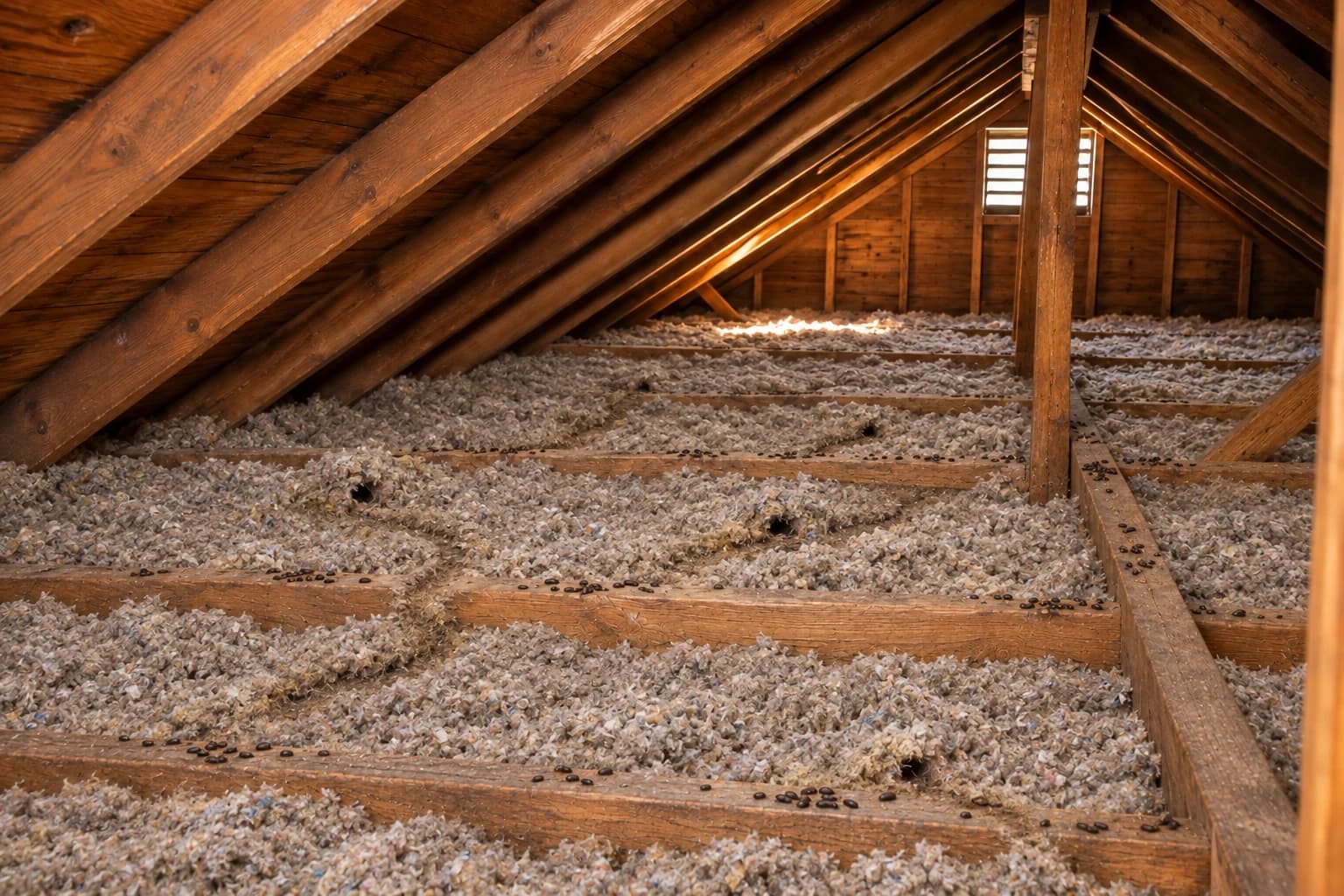
Attic: assess the affected material
Illustrative attic condition before cleanout. Soiled insulation, nests and debris are evaluated for removal.
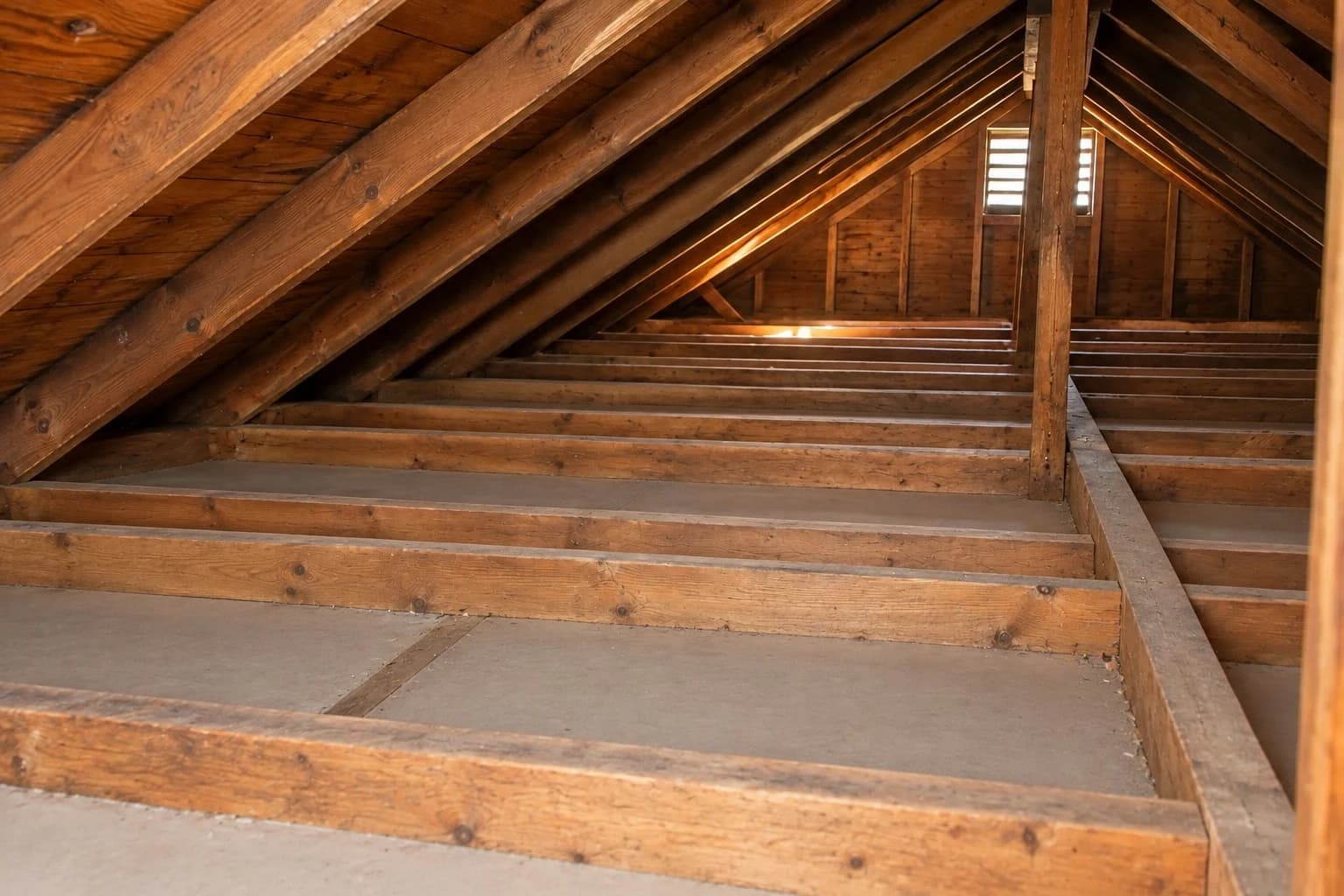
Attic: remove the agreed material
Illustrative cleanup goal after removal. Replacement insulation is a separately selected step.
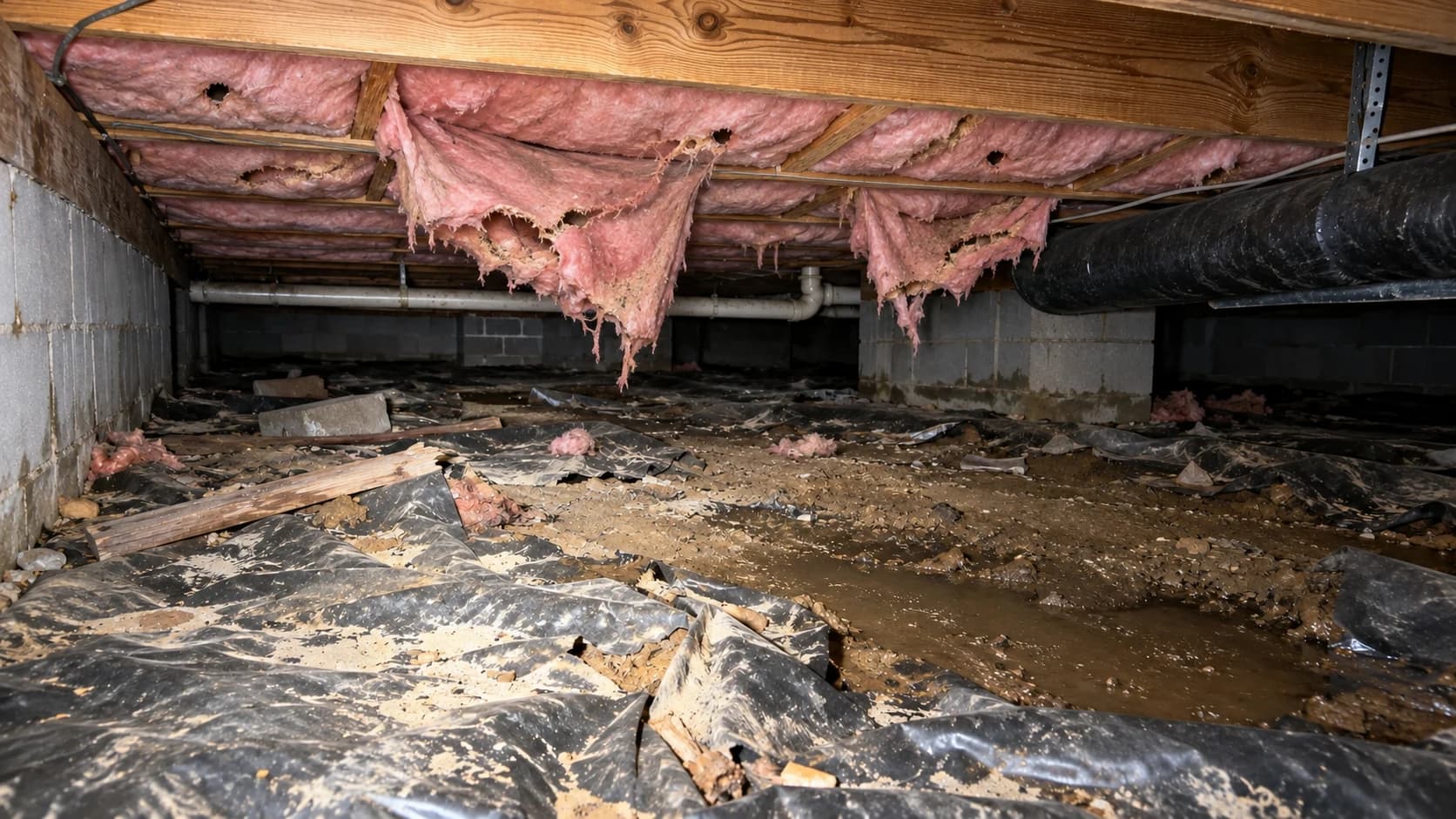
Crawl space: document the conditions
Illustrative crawl space with fallen insulation and debris. Moisture and entry concerns are reviewed too.
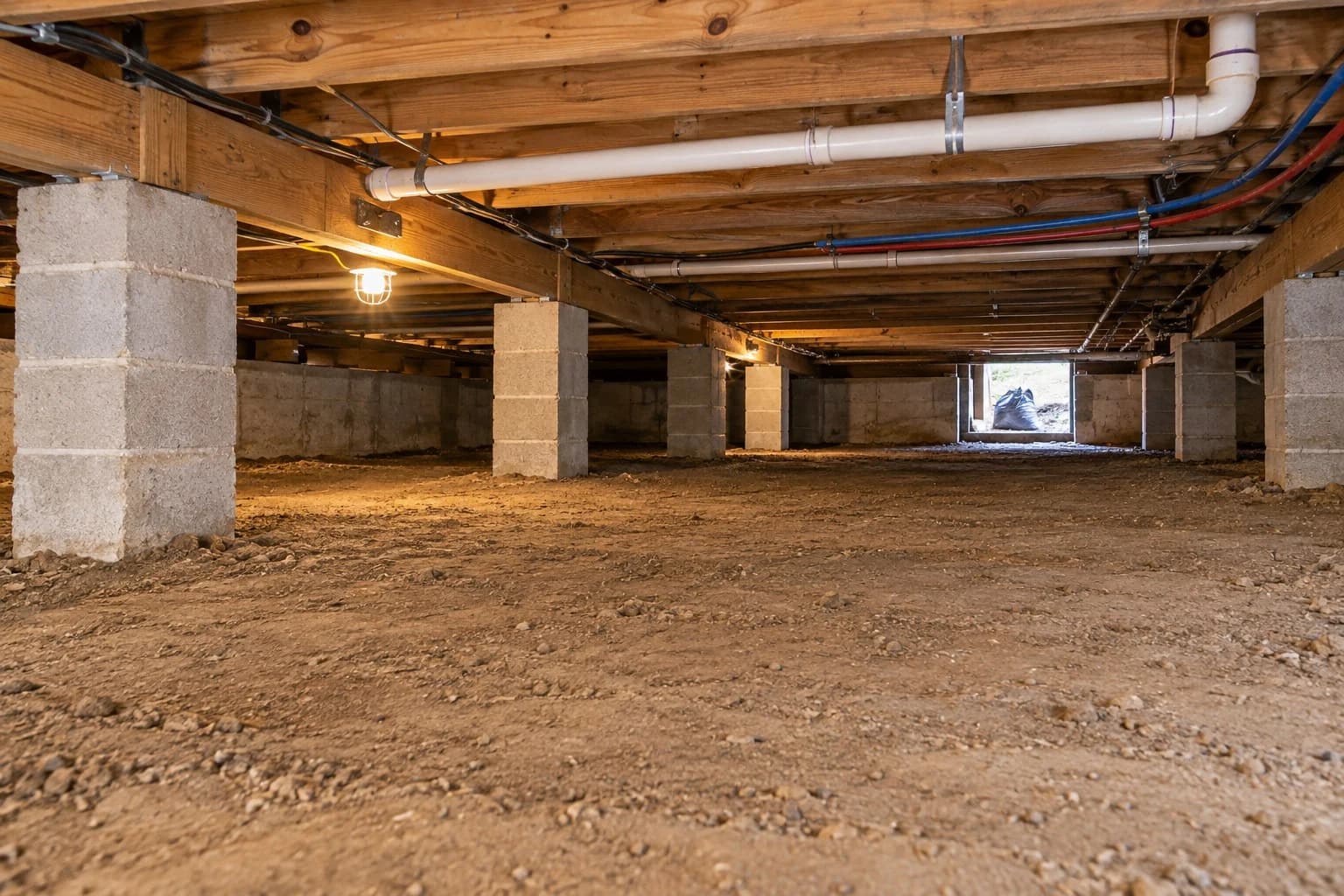
Crawl space: prepare for the next step
Illustrative cleanup goal. Repairs or Moisture Shield may be recommended after the space is assessed.
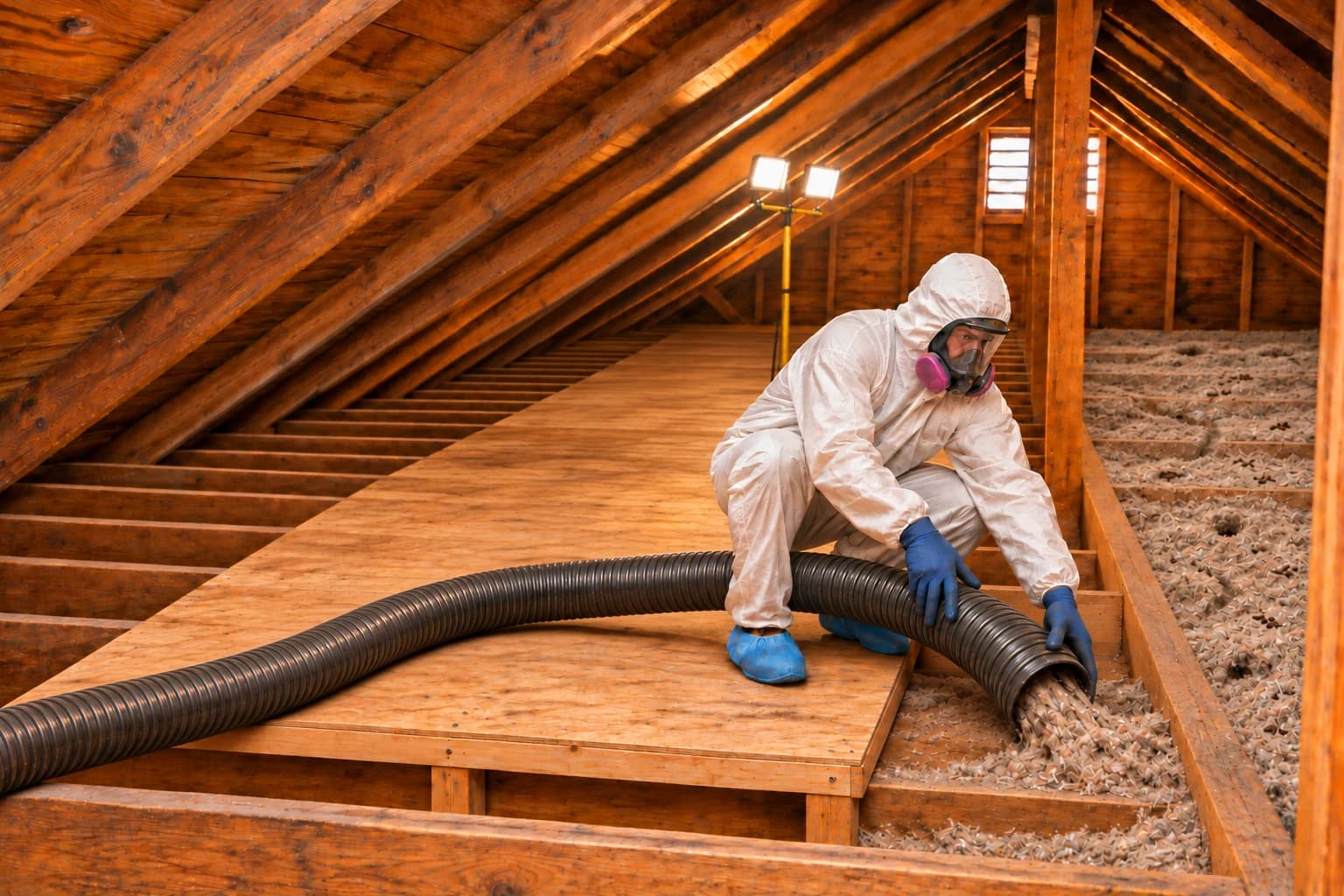
Controlled removal
Service illustration: protective equipment and insulation extraction. Waste cleanup precedes loose-fill removal.
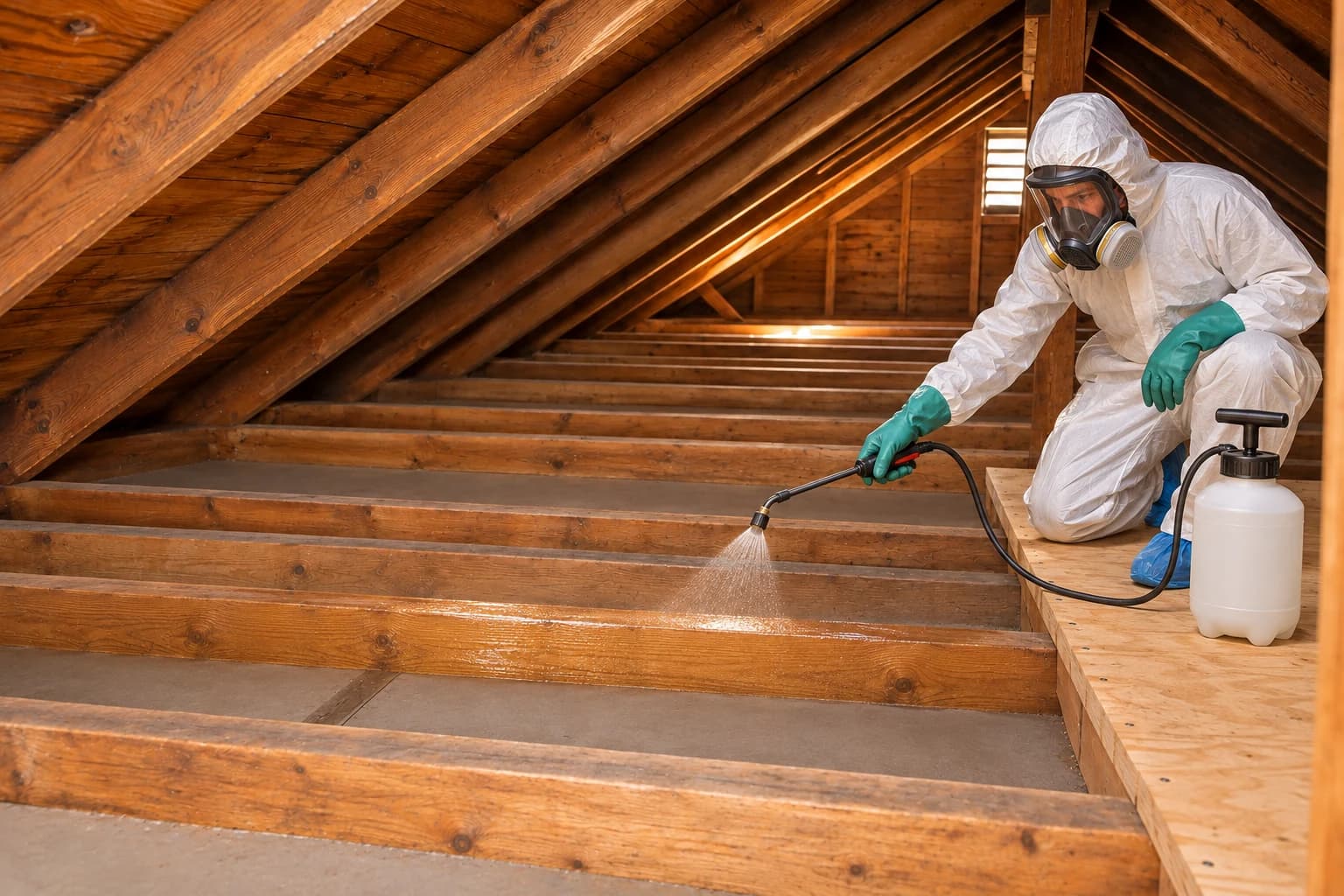
Targeted DSV application
Service illustration after removal. DSV disinfection is limited to eligible hard, nonporous surfaces as labeled.
Service illustrations show example conditions and methods, not completed-project results. Actual scope and results vary by property.
Why cleanout belongs in a complete recovery plan
- Remove the source of the mess: agreed droppings, nests, debris and contaminated insulation are taken out rather than left in the space.
- Plan removal around the conditions: inspection guides access protection, dust control and the handling needed for affected materials.
- Clean before appropriate treatment: DSV is applied to eligible surfaces as labeled after the required cleaning.
- Make the next investment count: a defined cleanout scope helps prepare for separately recommended exclusion, replacement insulation or moisture control.
When an attic or crawl space may need a cleanout
- Attics: droppings, nests, urine-soiled or tunneled insulation, animal remains and lingering odor after wildlife activity.
- Crawl spaces: animal waste, nesting debris, fallen or soiled insulation and moisture-damaged materials within the agreed scope.
- We identify what needs removal and what can be cleaned. A cleanout is recommended from the findings, not automatically added to every exclusion job.
Your cleanout and DSV plan
- Inspect and plan: document affected areas, protect access routes and select containment and protective equipment for the contamination.
- Remove and dispose: control dust while removing agreed waste, nests, debris and contaminated insulation. Rodent-waste cleanup precedes loose-fill insulation removal.
- Clean and prepare: remove soil and debris from eligible surfaces before the specified disinfection step.
- Apply DSV where appropriate: use the product label’s surface requirements, dilution and wet contact time, then follow ventilation and re-entry instructions.
- Review next steps: document the completed scope and explain any separately recommended exclusion, insulation, moisture control or repairs.
What DSV does
- DSV stands for Disinfectant, Sanitizer and Virucide. Nisus DSV is an EPA-registered product with claims for specified bacteria and viruses when used exactly as labeled.
- Disinfection claims apply to eligible hard, nonporous surfaces. Applying DSV does not establish disinfection of raw wood, soil or insulation, and spraying does not replace removal of contaminated material.
- Different organisms require different label directions. We do not describe DSV as killing every pathogen, eliminating raccoon roundworm eggs or making an entire attic disease-free.
Wildlife contamination and health concerns
- Risk depends on the animal, contamination and exposure. Not every animal carries disease; visible droppings alone do not identify a pathogen.
- Hantavirus: infected rodent urine, droppings and nesting material can release contaminated particles when disturbed. Inhaling them can cause serious illness.
- Raccoon roundworm: accidentally swallowing Baylisascaris eggs from contaminated hands or material can cause severe illness. Most chemical disinfectants do not kill the eggs; raccoon latrines need specialized cleanup.
- Histoplasmosis: disturbing material enriched by bird or bat droppings can release fungal spores that cause lung infection. Large accumulations require specialized precautions and may need a hazardous-waste specialist.
- Leptospirosis: infected animal urine can contaminate water or soil and expose people through contact with contaminated material.
- House-mouse LCMV: exposure to infected mouse urine, droppings, saliva or nesting material can cause illness. Pregnancy and weakened immunity increase concern.
- Salmonella: swallowing bacteria transferred from animal feces, contaminated hands, food or objects can cause intestinal illness.
- Fleas: rodents and their nests can harbor fleas. Cleanup and any needed pest treatment are assessed together.
- Rabies exposure is a medical issue: bites, scratches or possible bat contact need prompt advice from a healthcare professional or public-health department. Cleanout and DSV do not replace that evaluation.
Before you enter an affected space
- Keep people and pets away from waste. Do not dry sweep or use a household vacuum on rodent droppings, urine or nests; disturbing them can put contaminated particles into the air.
- If you feel ill after wildlife or rodent exposure, contact a healthcare professional and describe the exposure. For cleanup questions, your local health department can also advise.
Complete the protection around your home
- Exclusion helps stop new entry from the roof down. Cleanout addresses affected material left inside. Replacement insulation and ground-up moisture protection are added when the inspection supports them.
Health information and sources
The Infinity Guarantee
- Infinity completes the removal, cleaning and specified DSV application in your written cleanout scope. Contact the team if you have a concern about the completed work.
- Cleanout and DSV are one-time services. They do not include an ongoing guarantee that the space will remain free of pests, contamination, odors or disease.
- Separately selected PestTherm insulation, repair work, Rodent & Wildlife Shield and Moisture Shield carry their own workmanship or renewal coverage.