
Infinity Sentricon® Termite Baiting
Target the termite colony. Keep protection active year after year.
Termite damage can stay out of sight inside the wood that supports your home. Infinity Sentricon® uses colony-targeting bait stations and ongoing monitoring to help protect homes in Springfield, Branson and the Kansas City metro. Foraging termites feed on the bait and share it within the colony.
Start with a no-cost Infinity Certified Inspection. We check accessible areas for activity, entry routes and conditions that increase risk, then explain whether Sentricon baiting, TermiZone Barrier liquid treatment or a combined plan suits your property. Your written proposal defines the treatment scope, price and renewal coverage.
What could be happening behind your walls?
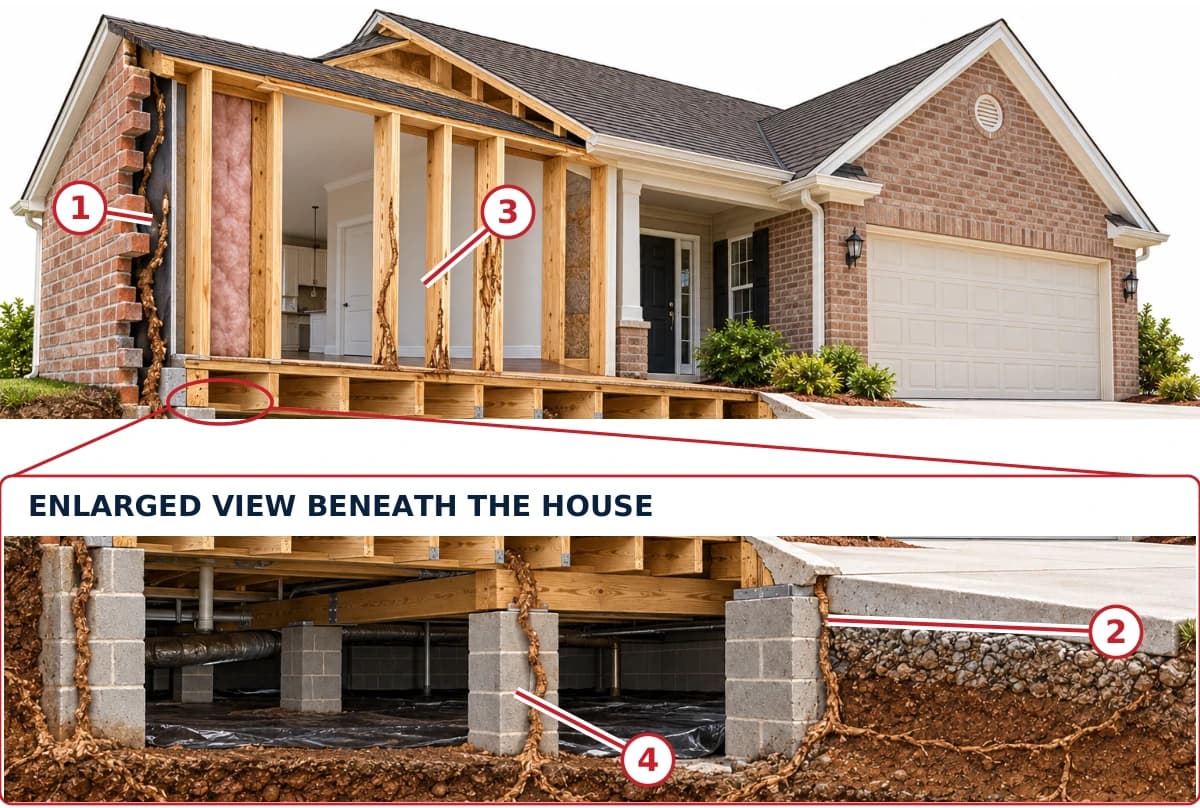
Termites can feed inside wood while its surface still looks sound. See the hidden entry routes and warning signs, then let an Infinity Certified Inspection help you choose the right protection.
Hidden entry. Lasting damage.
Follow the numbered routes: 1, behind brick veneer; 2, garage slab joints; 3, inside wall framing; 4, crawl-space piers. The enlarged view shows how concealed routes can lead from soil toward wood. This is a conceptual illustration.
Missouri is termite country
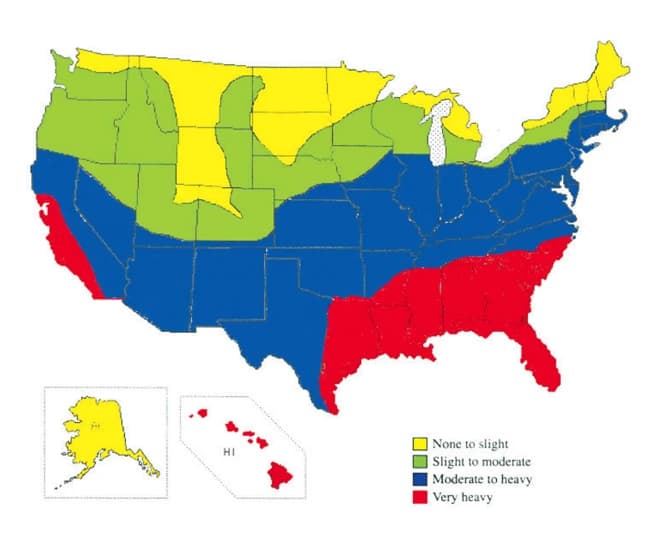
This UGA map places Missouri in the moderate-to-heavy subterranean termite activity zone. It shows general regional prevalence across species, not live infestations or a percentage chance for your home. Multiple zones can occur within a state.
Photo: University of Georgia Extension, activity map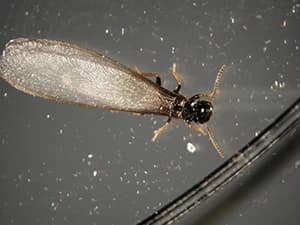
Swarmers are a reason to look closer
Eastern subterranean termites commonly swarm in Missouri in spring. Winged termites or shed wings indoors deserve an inspection. Outdoor swarmers indicate nearby activity but do not by themselves establish that your home is infested.
Photo: MU Extension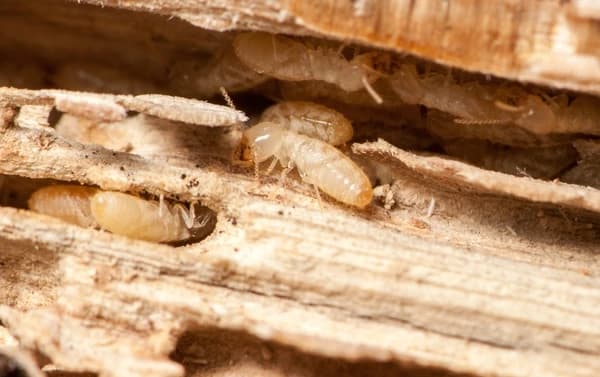
Workers do the hidden feeding
Workers consume wood, share food and care for the colony. Soldiers defend it; the queen and king reproduce; swarmers leave to start new colonies. The termites you can see may be only a small part of an established colony.
Photo: Matt Bertone / NC State ExtensionReference photographs and an illustrative cutaway. An inspection evaluates accessible evidence and conditions at your property; the regional map does not diagnose an infestation.
Why choose Infinity Sentricon
- Work against the colony: foraging termites carry bait back to other colony members, targeting the source of activity.
- Keep watch beyond the first visit: station checks, documented activity and bait maintenance support ongoing protection.
- Choose with confidence: your inspection explains the evidence and whether baiting, liquid treatment or both fit your home.
- Know who to call: an active agreement includes no-cost retreatment for covered termite activity under the Infinity Guarantee.
Small termites. Expensive damage.
- $6.8 billion in estimated U.S. property damage each year: NPMA’s 2026 figure covers all termite species nationwide, not a typical repair bill. Standard homeowners insurance generally excludes termite damage; check your policy.
- 1/32 inch can be enough: MU Extension reports that termites can use foundation gaps this small. A well-built home can still have concealed entry points.
- 50,000 to several hundred thousand termites can live in a mature eastern subterranean colony, according to Mississippi State Extension. Visible insects may represent only a fraction of the colony.
What increases your home’s termite risk?
- Wood touching soil, stored lumber and wood debris close to the house can create food sources and entry routes.
- Leaks, damp crawl spaces and poor drainage can support the moisture conditions subterranean termites need.
- Slab joints, utility openings, masonry voids and concealed wood near the foundation can make activity harder to notice.
- Mud tubes, indoor swarmers, discarded wings or unexplained wood damage warrant a closer look. No visible warning signs does not rule out concealed activity.
Your Sentricon termite protection plan
- Inspection for termite evidence, conducive conditions and accessible entry routes
- Sentricon bait stations positioned for your property and serviced according to the product label
- Annual station checks, activity documentation and bait maintenance as needed
- No-cost retreatment for covered termite activity while your protection remains active
- A written proposal explaining installation, renewal billing and warranty coverage
The Infinity Guarantee
- If covered subterranean termite activity returns during active coverage, Infinity returns at no charge to provide retreatment under your agreement.
- Annual renewal includes the annual inspection and service. Paying the renewal continues warranty coverage for another year and includes the next annual service; monthly billing does not mean monthly visits.
- This is retreatment coverage, not termite damage repair. The agreement and treatment diagram define the covered structure and treatment areas.
Know your options before hidden activity becomes a repair bill
- Your inspection gives you documented findings and a clear protection recommendation. You can ask questions about the evidence, station placement and renewal before choosing your plan.
- Sentricon targets the colony through bait stations. TermiZone Barrier uses a label-directed Termidor® soil treatment. We explain the advantages and access requirements for your home.